A close shave can feel silky when you step out of the shower, then leave you reaching for the razor again sooner than expected. When clients compare waxing versus shaving results, the biggest difference is not just how smooth skin feels that day. It is how long that smoothness lasts, how hair grows back, and how your skin handles the process.
Both methods have a place in a grooming routine. Shaving is quick and familiar. Professional waxing removes hair from the root, offering a longer break from daily upkeep. The better choice depends on the area being treated, your schedule, your skin sensitivity, and what kind of maintenance feels realistic for you.
Waxing Versus Shaving Results at a Glance
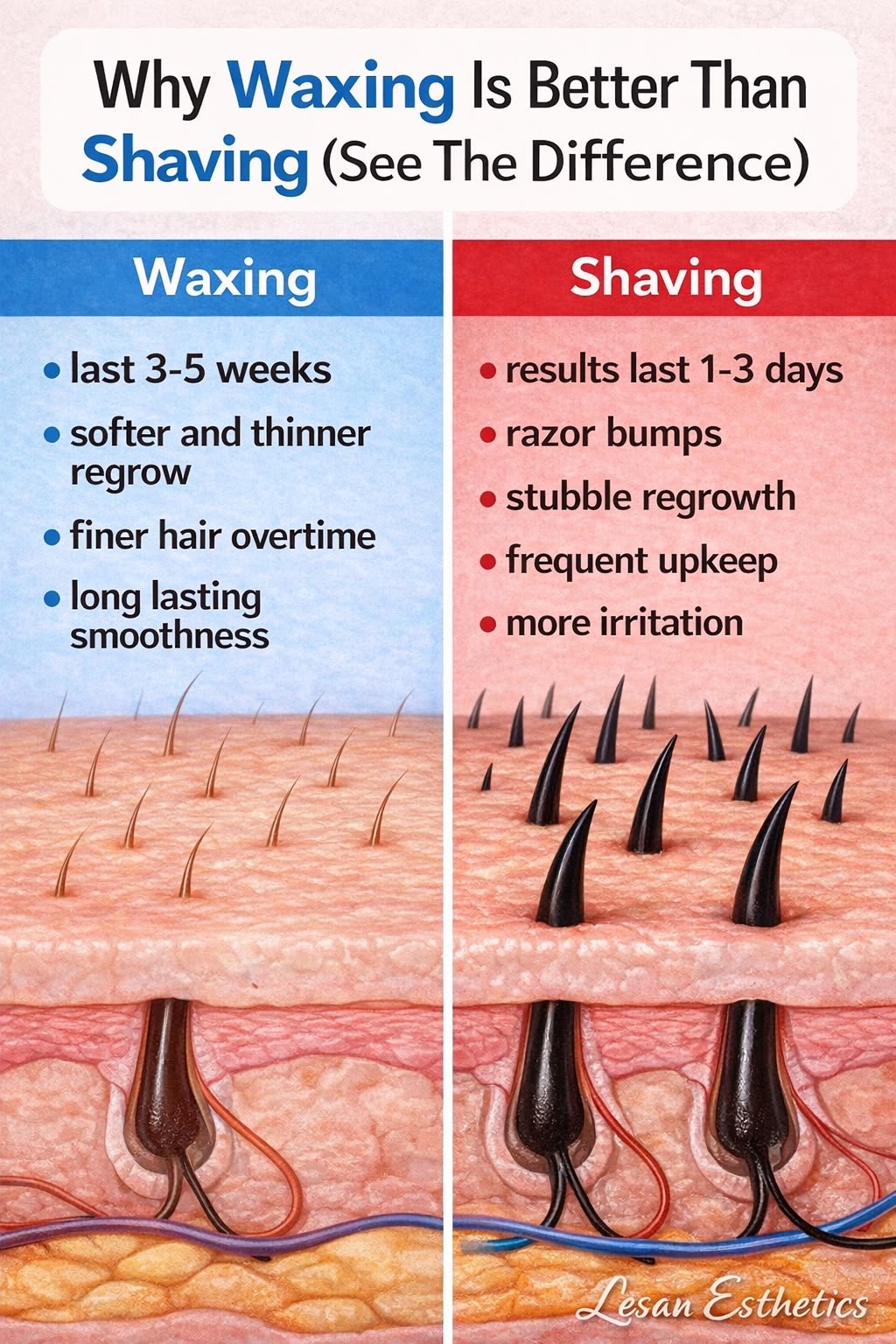
Shaving cuts hair at the skin’s surface. Because the root remains in place, new growth can be noticeable within one to three days for many people. The result is immediate, but short-lived. A razor can be useful for a last-minute need, though frequent shaving often means frequent friction against the skin.
Waxing removes the full hair from the follicle. Most clients enjoy smooth skin for about three to six weeks, although individual regrowth cycles vary. Hair needs time to grow back before it becomes visible, which is why waxing can feel much lower maintenance between appointments.
The texture of regrowth can also look and feel different. Shaved hair may seem blunt as it grows out because the razor creates a straight-cut tip. Waxed hair grows in as a new, tapered strand. Regular appointments can make regrowth feel less coarse and more manageable for some clients over time.
How Long Each Result Really Lasts
For legs, underarms, bikini areas, and facial hair, shaving generally requires attention every few days or even daily. Hair growth patterns, hormones, and natural hair color and texture all affect the timeline. Someone with fine, light hair may go longer between shaves than someone with darker, coarser hair.
With waxing, the hair is removed below the surface, so the growing-out phase is usually less immediate, as the follicles need to create a brand new hair strand. Many clients schedule body waxing every four to six weeks. Facial services may be needed a little more often, depending on the area and personal preference. Brazilian waxing commonly settles into a four-to-six-week rhythm once clients find the interval that works for their growth cycle.
Consistency matters. If you shave between wax appointments, different hairs can be at different stages of growth, making the next result less even. Staying on a regular waxing schedule allows more hair to follow a similar growth pattern, which can make appointments more efficient and help you enjoy a cleaner-looking result.
Smoothness, Stubble, and Regrowth
The sensation after shaving and waxing is noticeably different. Shaving can leave the skin smooth at first, but stubble may return quickly, especially on areas with coarse growth such as the bikini line, underarms, or lower legs. Repeated passes with a razor can also leave skin feeling dry or irritated.
Waxing removes the hair rather than simply shortening it. That means there is no immediate stubble at the surface. The finish can feel especially helpful before a beach weekend, vacation, special event, or any time you would rather not think about daily hair removal.
There is a trade-off. You need enough hair growth for wax to grip properly, usually about one-quarter inch, or roughly the length of a grain of rice. This can require a little planning before your first visit. Shaving is more spontaneous, while waxing rewards a routine.
Skin Comfort: The Part That Depends on You
Neither hair-removal method is automatically best for every skin type. A dull razor, rushed shaving technique, or lack of lubrication can contribute to razor burn, nicks, itching, and ingrown hairs. These concerns are particularly common in sensitive areas where hair is thick and skin experiences friction from clothing.
Waxing can cause brief discomfort during removal and temporary redness afterward. The right professional technique, clean application practices, and proper pre- and post-wax guidance make a meaningful difference. A licensed esthetician can also help you decide whether waxing is appropriate for an area that is prone to irritation.
If you use prescription retinoids, strong exfoliants, certain acne medications, or have recently had a peel or other skin treatment, tell your esthetician before your appointment. Some products and services can make skin more vulnerable to lifting or irritation. This is one reason an honest consultation matters, especially for facial waxing.
For sensitive skin, avoid treating waxing like a one-size-fits-all service. Your hair texture, recent skin care, menstrual cycle, sun exposure, and prior reactions are all relevant. A comfortable experience starts with a provider who listens without judgment and adjusts care when needed.
Which Areas Benefit Most From Waxing?
Waxing is often chosen for areas where daily shaving feels inconvenient or irritating. Bikini and Brazilian waxing can offer a cleaner result with less frequent maintenance. Underarm waxing may reduce the shadow that can remain after shaving because hair is removed from the root. Leg waxing can save time for people who do not want to shave large areas every few days.
Facial waxing is also popular for brows, upper lip, chin, and sideburn areas because precision matters. Brows, in particular, benefit from a detailed approach. A skilled esthetician can remove unwanted hair while preserving the shape that suits your features, rather than taking off more than intended with a razor or at-home tool.
Shaving may still make sense for areas that are hard to grow out, for clients who need a fast temporary option, or when a medical or skin-care situation makes waxing unsuitable. The goal is not to force one method into every routine. It is to choose the method that gives you the comfort and upkeep level you want.
Getting Better Waxing Results
A few simple habits can improve both comfort and the quality of your result:
- Let hair grow to about one-quarter inch before your appointment. Very short hair may not be removed evenly.
- Gently exfoliate one or two days before waxing, but do not scrub aggressively or exfoliate on irritated skin.
- Arrive with clean skin and skip heavy lotions, oils, or self-tanner on the treatment area.
- For the first 24 to 48 hours afterward, avoid heat, intense exercise, swimming, tight clothing, and fragranced products on freshly waxed skin.
After that initial recovery period, gentle exfoliation and regular moisturizing can help reduce the chance of trapped hairs. Do not pick at bumps or attempt to tweeze deeply ingrown hairs. If you are concerned about a reaction or persistent irritation, check with a qualified professional or medical provider.
Choosing the Routine You Can Maintain
The most practical choice often comes down to time. Shaving spreads the work across many short sessions each month. Waxing asks for a scheduled appointment and a little regrowth beforehand, then gives you several weeks with less to manage.
For first-time clients, a professional waxing appointment can feel intimidating, especially for intimate services. It should not feel rushed or impersonal. At WonderWax, thoughtful communication, sanitation, and detailed care are part of making the service feel more comfortable from the moment you arrive.
If you love the convenience of shaving but are tired of stubble, repeated razor irritation, or daily upkeep, try waxing one area first. Your underarms, brows, or bikini line can be a useful starting point. Pay attention to how your skin feels, how long the result lasts, and whether the appointment rhythm fits your life. The best hair-removal routine is the one that leaves you feeling comfortable, cared for, and confidently yourself.