A Brazilian before a beach weekend, a brow cleanup before an event, or your regular underarm appointment can all bring up the same question: sugaring vs waxing, which one is right for your skin? Both methods remove hair from the root and can leave skin smooth for weeks. The best choice usually comes down to your hair type, skin sensitivity, treatment area, and the quality of the professional performing the service.
The conversation is often framed as one method being better than the other. In reality, both can work beautifully when the service is tailored to you. A thoughtful esthetician will consider your skin, your previous hair-removal experiences, and your comfort level before getting started.
Sugaring vs Waxing: How the Methods Work
Sugaring uses a pliable paste made primarily from sugar, water, and an acidic ingredient such as lemon. The paste is applied to the skin and removed with the direction of hair growth. It can be used with a strip or as a hand technique, depending on the product and the area being treated.
Waxing uses warm wax to grip the hair. Soft wax is removed with a cloth or paper strip, while hard wax firms up on the skin and is removed without a strip. Professional wax is selected based on the treatment area, hair texture, and skin needs. Hard wax is especially common for sensitive areas such as the face, underarms, and Brazilian area because it is designed to adhere more to the hair than the skin.
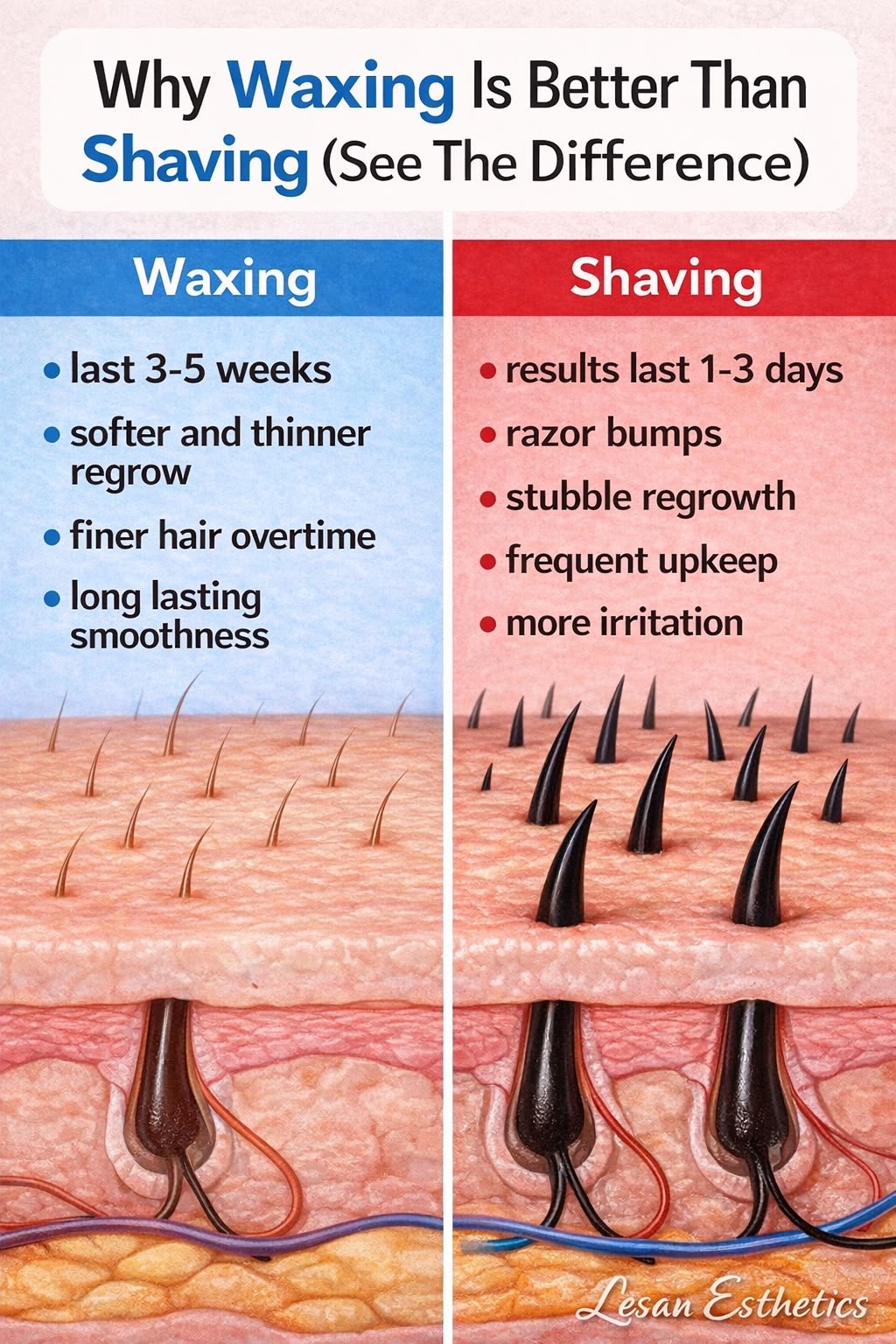
Both methods pull hair from the follicle rather than cutting it at the surface like shaving. That is why results last longer, and why regular appointments can make a noticeable difference in how your hair grows back over time. Hair may return finer or feel less dense for some clients, although everyone’s growth pattern is different.
The Results Are More Similar Than They Are Different
With either sugaring or waxing, most clients enjoy smooth skin for roughly three to six weeks. Your personal timeline depends on your natural growth cycle, hormones, the area treated, and how consistently you book appointments.
Neither service permanently removes hair. Both require the hair to be long enough for the product to grip it. For waxing, that generally means about one-quarter inch of growth, or approximately the length of a grain of rice.
A clean result is not only about the product. Proper cleansing, correct application temperature, hair direction, skin tension, and careful detail work all matter. This is particularly true for brows, Brazilian waxing, and other areas where precision affects both comfort and the finished look.
Is Sugaring Less Painful Than Waxing?
Some people find sugaring more comfortable, especially because the paste is removed in the direction of natural hair growth. Others prefer hard wax and feel it is quicker, gentler, and more effective for their particular hair texture. Pain tolerance is personal, so there is no honest one-size-fits-all answer. The most common comparison for the two in terms of pain tends to be that sugaring requires multiple pulls to lift up the wax and causes extra discomfort, whereas hard wax is typically one swift pull and more manageable.
The first appointment is often the most uncomfortable because the hair has not yet settled into a regular removal schedule. Hair that has been shaved for months can be coarse and grow in at different lengths, which can make any root-removal service feel more intense. With consistent appointments, many clients find their services become easier to manage.
Technique also matters more than people expect. An experienced esthetician works efficiently, supports the skin during removal, checks in about your comfort, and avoids repeatedly going over the same area when possible. A rushed service or poor technique can make either method feel harsher than it needs to.
Choosing Based on Your Skin and Hair
If your skin is sensitive, do not assume you must choose sugaring. The right answer depends on what causes your sensitivity. Some clients react to fragrance, certain resins, heat, exfoliating products, or friction. Others simply have skin that gets red easily after any form of hair removal.
A professional wax appointment can be customized with an appropriate wax formula, careful temperature control, and a pace that respects your skin. If you have had irritation in the past, share exactly what happened, where it occurred, and how long it lasted. That information helps your esthetician make a safer recommendation.
Coarse hair often responds very well to waxing, particularly with hard wax in intimate areas. It provides strong grip and can remove a substantial amount of hair efficiently. Fine facial hair may be suited to either method, though brow shaping requires an especially detail-oriented approach to protect the shape you want.
For Brazilian services, consistency is usually more valuable than chasing a supposedly perfect method. Choose a service that feels respectful, clean, and comfortable enough for you to maintain every four to six weeks. A skilled provider will guide you through the process without judgment, whether it is your first appointment or your fiftieth.
When Waxing May Be the Better Fit
Waxing can be an excellent option for clients who want a fast, precise service across a range of areas. It is adaptable for brows, lip and chin hair, underarms, legs, arms, back, chest, and Brazilian waxing. Different wax types allow an esthetician to adjust the service to the area rather than treating every part of the body the same way.
It can also be a practical choice when you value a consistent appointment routine. At WonderWax, licensed estheticians focus on individualized waxing services, sanitation, and the small details that help clients feel comfortable returning regularly. A familiar esthetician who knows your skin, preferred brow shape, and comfort needs can make routine grooming feel much less stressful.
Preparation Matters More Than Most People Realize
Whether you choose sugaring or waxing, arrive with clean, dry skin and enough hair growth for removal. Avoid applying heavy lotion, body oil, or deodorant directly before your appointment if the treatment area allows. These products can interfere with product grip.
For 24 to 48 hours before a service, avoid aggressive exfoliation on the area being treated. If you use retinoids, prescription acne products, strong acids, or other active skincare products, tell your esthetician before booking or at the start of the appointment. Some products and medications can make skin more vulnerable to lifting or irritation, especially on the face.
Also let your provider know if you have a sunburn, rash, open skin, recent peel, recent laser treatment, or a new skincare reaction. Rescheduling is sometimes the most skin-conscious choice. A professional should never wax or sugar compromised skin simply because the appointment is on the calendar.
Aftercare Helps Protect Your Smooth Results
Mild redness or small bumps immediately after hair removal can be normal, particularly in sensitive areas. Keep the area clean, avoid touching it unnecessarily, and give the skin time to settle. For the first day, skip intense exercise, hot baths, saunas, swimming, direct sun exposure, and tight clothing when possible. Heat, sweat, and friction can make freshly treated skin feel more irritated.
After 24 to 48 hours, gentle exfoliation can help reduce the chance of ingrown hairs. Use a method appropriate for your skin and do not scrub aggressively. Regular moisturizing also supports a healthier skin barrier between appointments.
If you experience persistent swelling, significant discomfort, blistering, or a reaction that does not improve, contact a medical professional. A qualified esthetician can offer aftercare guidance, but ongoing or severe symptoms deserve medical attention.
The Best Choice Is the One You Can Feel Good About
Sugaring and waxing are both valid ways to get smooth, polished results. The better method is the one that works with your skin, fits your preferred maintenance schedule, and is performed by someone who listens carefully.
If you are unsure, start the conversation before the first hair is removed. A good esthetician will welcome your questions, explain what they recommend for the area, and make sure you never feel pressured into a service that does not feel right for you.